Cementitious vs. Intumescent Fireproofing: Which Is Right for Your Facility?
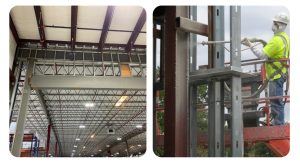
Fireproofing is an important part of protecting commercial and industrial structures. Our commercial fireproofing services and industrial fireproofing services help slow the spread of heat and help maintain the strength of structural components during a fire.
Two commonly used fireproofing systems are cementitious fireproofing and intumescent coatings. While both are designed to improve fire resistance, they differ in appearance, performance characteristics, and ideal applications. These fireproofing methods are commonly used as part of comprehensive commercial and industrial fireproofing services to meet safety and performance requirements.
Understanding the differences can help facility managers make informed decisions based on building type, environment, and performance requirements.
What Is Cementitious Fireproofing?
Cementitious fireproofing is a spray-applied material made from cement-based compounds. It forms a thick, protective layer that helps insulate structural components from heat. This material is often used in areas where appearance is not the primary concern, such as mechanical rooms or structural spaces that are not visible to occupants.
Key Characteristics of Cementitious Fireproofing
- Thick, textured appearance
- Spray-applied material
- Typically used on structural steel
- Cost-effective option for large areas
- Often used in concealed spaces
- Provides reliable fire resistance ratings
Cementitious materials are commonly found in parking garages, warehouses, and industrial facilities.
What Are Intumescent Coatings?
Intumescent coatings are thin-film fireproof coatings that expand when exposed to high temperatures. When exposed to heat, the coating forms a char layer that helps protect the underlying material from fire damage. Because of their smooth and paint-like finish, intumescent coatings are often used in areas where aesthetics is important.
Key Characteristics of Intumescent Coatings
- Thin coating appearance similar to paint
- Expands when exposed to heat
- Can be applied in visible areas
- Maintains architectural appearance
- Available in different formulations for interior or industrial environments
- Often used where design considerations are important
These coatings are frequently used in commercial buildings, offices, and public-facing spaces.
Cementitious vs. Intumescent: Key Differences
| Feature | Cementitious Fireproofing | Intumescent Coatings |
|---|---|---|
| Appearance | Thick, textured | Smooth, paint-like finish |
| Application | Spray-applied | Spray or brush & roll |
| Best for | Industrial or concealed areas | Visible or architectural spaces |
| Thickness | Thicker material layer | Thin-film coating |
| Durability | More susceptible to surface damage | Durable finish options available |
| Cost | Often more economical | Higher material cost |
| Aesthetics | Typically hidden from view | Designed to maintain appearance |
Where Cementitious Fireproofing Is Commonly Used
Cementitious systems are often selected for functional environments where appearance is less critical. Typical applications include:
- Structural steel in warehouses
- Parking structures
- Mechanical rooms
- Industrial facilities
- Areas above ceilings
- Utility spaces
Where Intumescent Coatings Are Commonly Used
Intumescent coatings are often chosen when maintaining the appearance of structural elements is important. Typical applications include:
- Exposed structural steel
- Commercial buildings
- Lobbies and atriums
- Educational facilities
- Healthcare environments
- Retail spaces
Choosing the Right Fireproofing System for Commercial & Industrial Applications
Selecting between cementitious and intumescent fireproofing depends on several factors, including building type, visibility of structural components, environmental exposure, and project budget. Each system serves an important role in fire protection strategies, and in some cases, facilities may use both types in different areas.
Supporting Long-Term Fire Protection Performance
Fireproofing systems are an important part of maintaining building safety. Proper selection and maintenance of fireproofing materials can help facilities support structural performance and prepare for potential fire risks. Understanding the differences between cementitious and intumescent coatings can help facility teams make informed decisions that align with both operational and safety goals.
If you are planning a new project, evaluating existing fireproofing, or considering upgrades, our team can help you determine the most appropriate solution for your environment and building requirements.
Contact us today to schedule your fireproofing consultation and learn how cementitious and intumescent systems can support your facility’s protection strategy.